Luis Gerónimo de Oré: The World of an Andean Franciscan from the Frontiers to the Centers of Power (Review)

In 1586, a 32-year-old Franciscan friar named Luis Gerónimo de Oré began his first job in an Indigenous parish in the Colca Valley in the Peruvian Andes as an “outsider and perhaps more alone among the ‘others’ than he had been at any time in his life” (p. 91). When he left the valley nine years later, he carried with him a set of religious manuals, dictionaries, and grammars that he had written and translated into Quechua and Aymara, that would reshape the Catholic Church’s missionary efforts in the Americas.… Read More Luis Gerónimo de Oré: The World of an Andean Franciscan from the Frontiers to the Centers of Power (Review)
Mastering the Law: Slavery and Freedom in the Legal Ecology of the Spanish Empire (Review)

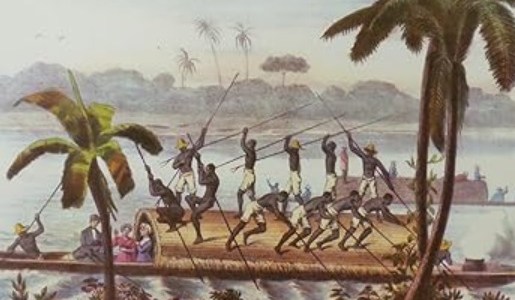
In 1629, Catalina Angola and Domingo Angola, two African-born captives enslaved near what is today the northern Colombian city of Cartagena, learned that Catalina’s enslaver was moving her to the city. Fearing their separation, the couple petitioned their parish priest for marriage, hoping the Catholic Church’s respect for the sacrament of matrimony would help them resist the move. Catlina’s enslaver, however, quickly uncovered the stratagem and did everything he could to prevent their union. While unable to intervene legally, he beat Catalina violently and shipped her downriver to separate the two. By the end of the next year, however, it was the enslaver who found himself excommunicated, publicly shamed, and forced to pay hefty fees and fines for his actions. In a society generally viewed as hostile to enslaved Africans, why did Catalina and Domingo win, and what does this tell us about slavery as an institution in the early colonial period?… Read More Mastering the Law: Slavery and Freedom in the Legal Ecology of the Spanish Empire (Review)

Assassination Days Before Presidential Vote Shakes Ecuador – and Region

For years, Ecuador has been labeled a bastion of peace in a region racked by violence and political unrest. But the recent assassination of anti-corruption presidential hopeful Fernando Villavicencio shattered that perception, highlighting how the small South American nation is facing down a rapidly expanding war on organized crime amid political divisions and limited economic resources.… Read More Assassination Days Before Presidential Vote Shakes Ecuador – and Region

Ecuador Habló: La Minería es Peor que Correa

El referéndum del 4 de febrero fue significativo. En su nivel más obvio, le dio al presidente Lenín Moreno una sólida victoria política y al expresidente Rafael Correa una derrota asombrosa. Pero más allá de las reacciones en Quito, los votantes en las zonas mineras de la Sierra y el Oriente enviaron un mensaje inequívoco:… Read More Ecuador Habló: La Minería es Peor que Correa

The Tupac Amaru Rebellion: Charles Walker

Charles Walker left few stones unturned in The Tupac Amaru Rebellion, an impressive analysis of Spain’s largest colonial rebellion. This essay briefly examines two original arguments and two secondary claims made by Walker that help shape our understanding of an uprising that ultimately reached levels of total violence rarely seen in human history. Walker’s “seemingly… Read More The Tupac Amaru Rebellion: Charles Walker

The Inner Life of Empires: Emma Rothschild

Emma Rothschild’s Inner Life of Empires presents a “large microhistory” of the Johnstone family, eleven children, their parents, and two of their slaves, who lived and moved within influential social and intellectual circles during the eighteenth century Scottish Enlightenment (269). This prosopography traces the children’s lives across the British Empire as well as their friendships… Read More The Inner Life of Empires: Emma Rothschild

Mining for the Nation: Jody Pavilack

When Chile granted literate men over the age of 21 the right to vote in 1925, a new era marked by the rise of mass society had begun.[1] Similar to processes unfolding around the world, the enfranchisement of progressively-larger swaths of Chile’s population in the early-twentieth century upended traditional politics and undermined the economic status… Read More Mining for the Nation: Jody Pavilack

Ugly Stories of the Peruvian Agrarian Reform (Review)

Enrique Mayer’s Ugly Stories of Peruvian Agrarian Reform, a “people-oriented kind of oral history,” provides a memory study of the 1969 land reforms enacted by Peruvian President Juan Velasco Alvarado. Written from the perspective of historical stakeholders and incorporating Mayer’s lifelong participation in the reforms as an academic observer, he weaves a series of testimonies into a larger narrative chronicling this period of “revolutionary reforms gone astray.” … Read More Ugly Stories of the Peruvian Agrarian Reform (Review)

Courage Tastes of Blood: Florencia Mallon

Florencia Mallon’s 2005 book, Courage Tastes of Blood: The Mapuche Community of Nicolás Ailío and the Chilean State, 1906-2001, examines the history of a Mapuche indigenous community in southern Chile, focusing on their defense of land and culture in the face of State colonization from 1906 to 2001. Her monograph places archival documents in dialogue… Read More Courage Tastes of Blood: Florencia Mallon

Mastery, Tyranny, & Desire: Trevor Burnard

Death in the sun-drenched fields or torture in the shade of the house? Resistance or collaboration? How did enslaved Africans cope with the trauma of life on Anglo-Jamaican sugar plantations in the eighteenth century? These are some of the very disturbing questions Trevor Burnard tackles in chapter six of Mastery, Tyranny, & Desire, where he… Read More Mastery, Tyranny, & Desire: Trevor Burnard

To Die in This Way: Jeffrey Gould

Jeffrey Gould’s monograph, To Die in This Way (1998), looks at the dialectic relationship between indigenous identity and the formation of the nation-state in Nicaragua from the late nineteenth century until the mid twentieth. Gould challenges the “myth of mestizaje” that holds that, except for the Miskito coast, the Central American nation is an ethnically-homogeneous… Read More To Die in This Way: Jeffrey Gould

With Broadax and Firebrand: Warren Dean

Warren Dean’s With Broadax and Firebrand is a history of the destructive impact of human activity on the Atlantic forests of Brazil. Chronicling social attitudes towards nature and the impact of those attitudes on the forests from pre-Columbian times to the present, he highlights the ultimately unproductive exploitation of Brazilian natural resources, which left the… Read More With Broadax and Firebrand: Warren Dean

Changing Fortunes: Karl Zimmerer

Karl Zimmerer’s Changing Fortunes: Biodiversity and Peasant Livelihood in the Peruvian Andes looks at agriculture systems and species biodiversity in the Peruvian Andes in the late twentieth century. Focusing on an indigenous community in Paucartambo region, near Cuzco, the author explores the divergent fortunes of different communities in this area as they adapted to changing… Read More Changing Fortunes: Karl Zimmerer

Thread of Blood: Ana María Alonso

The role of violence and the importance of cultural identity in the struggles between indigenous communities and the nation-state are the subjects of Ana María Alonso’s monograph, Thread of Blood: Colonialism, Revolution, and Gender on Mexico’s Northern Frontier (1995). This anthropological history of machismo in the culturally-mestizo Namiquipa community in Chihuahua looks at how violence,… Read More Thread of Blood: Ana María Alonso

Sexuality and Marriage in Colonial Latin America: Asunción Lavrin

Asunción Lavrin’s edited volume, Sexuality and Marriage in Colonial Latin America, presents a series of perspectives on what Lavrin calls the “conquest of the mind,” the means through which the Spanish state and Catholic Church sought to maintain control over colonial society. The authors challenge received understandings of the region’s early history by showing the… Read More Sexuality and Marriage in Colonial Latin America: Asunción Lavrin

Native Society and Disease in Colonial Ecuador: Suzanne Alchon

Suzanne Alchon: Native Society and Disease in Colonial Ecuador (1991) explores the relationship between epidemic diseases and indigenous populations in the north-central highlands of Ecuador in the sixteenth and seventeenth centuries. Alchon argues that appreciating the role of epidemics in everything from food security to politics is critical to understanding changes in regional history in… Read More Native Society and Disease in Colonial Ecuador: Suzanne Alchon

Oppressed But Not Defeated: Silvia Rivera Cusicanqui

Silvia Rivera Cusicanqui’s Oppressed but Not Defeated, on the struggles of Aymara and Quechua peasants in the highlands and western valleys of the Bolivian Andes, focuses on the creation of peasant unions after the 1952 revolution by the Movimiento Nacionalista Revolucionario. Her book is a concise collection of essays written in collaboration with Bolivian peasant… Read More Oppressed But Not Defeated: Silvia Rivera Cusicanqui

The Agrarian Question and the Peasant Movement in Colombia: Léon Zamosc

Sociologist Léon Zamosc’s The Agrarian Question and the Peasant Movement in Colombia, looks at the development of agrarian capitalism and peasant land struggles in Colombia between 1967 and 1981. In ten concise chapters, Zamosc analyzes differences in agrarian strategies, changes in peasant-state relations, and what he calls the politics and ideology of the “peasant challenge,”… Read More The Agrarian Question and the Peasant Movement in Colombia: Léon Zamosc

Huarochirí: Karen Spalding

Karen Spalding’s history of colonial Peru, Huarochirí, begins with the origins of Andean society, following social changes from pre-Inca days until the height of colonial rule. Written in the mid-1980s amidst a brutal economic crisis that inordinately impacted indigenous communities in areas like Huarochirí, this monograph seems an attempt to revalorize Andean society at a… Read More Huarochirí: Karen Spalding

Miners of the Red Mountain (Review)

Peter Bakewell’s Miners of the Red Mountain: Indian Labor in Potosí, 1545-1650 (1984) looks at the changing systems of labor and production used at the silver mines of Potosí in the late sixteenth and early seventeenth centuries. Bakewell questions the long-held assumption that the mines were overwhelmingly worked by forced laborers, arguing instead that declining silver output and new refining technologies fueled the growth of a competitive market for specialized, wage-earning workers.… Read More Miners of the Red Mountain (Review)

Changes in the Land: William Cronon

William Cronon’s Changes in the Land: Indians, Colonists, and the Ecology of New England (1983) looks at environmental change and human landscaping in pre-Columbian and colonial New England. Cronon argues that what we think of as “nature” on the so-called American frontier was not an untouched and pristine wilderness, but a heavily landscaped environment where… Read More Changes in the Land: William Cronon

Peru’s Indian Peoples and the Challenge of Spanish Conquest: Steve Stern

Stern, Steve J. Peru’s Indian Peoples and the Challenge of Spanish Conquest: Huamanga to 1640. Madison, Wis: University of Wisconsin Press, 1982. Steve Stern’s Peru’s Indian Peoples and the Challenge of Spanish Conquest: Huamanga to 1640 centers on colonial Huamanga, a strategic military and economic region along the route between Lima and Potosí. It was… Read More Peru’s Indian Peoples and the Challenge of Spanish Conquest: Steve Stern

Peasant Cooperatives and Political Change in Peru: Cynthia McClintock

Cynthia McClintock’s monograph, Peasant Cooperatives and Political Change in Peru, looks at the social and political effect of the agrarian reforms of the Velasco administration between 1968 to 1975. Focusing closely on the 1969 hacienda expropriations and subsequent implementation of self-managing agrarian cooperatives, McClintock uses a series of social surveys, carried out by Cornell University… Read More Peasant Cooperatives and Political Change in Peru: Cynthia McClintock

Repartos y Rebeliones: Jürgen Golte

Jürgen Golte’s Repartos y Rebeliones, published in German in 1977 and translated into Spanish by Carlos Degregori in 1980, analyzes the implementation, evolution, and resistance to the repartimiento de efectos, put in place by Spain’s Bourbon reformers in the eighteenth century.[1] Golte sought to revise earlier studies that overlooked the role of the repartos, a… Read More Repartos y Rebeliones: Jürgen Golte

Conquest and Agrarian Change: Robert Keith

Robert Keith’s 1976 Conquest and Agrarian Change: The Emergence of the Hacienda System on the Peruvian Coast, explored the rise of Spanish plantations in seven valleys along Peru’s southern coast in the second half of the sixteenth century. Keith emphasized the legacy of pre-Colombian societies in the development of the hacienda, arguing that in addition… Read More Conquest and Agrarian Change: Robert Keith