Native Lords of Quito in the Age of the Incas: Frank Salomon

Frank Salomon’s Native Lords of Quito in the Age of the Incas (1985) is still the most complete ethnohistory of the Ecuadorian Andes in English. Making extensive use of indigenous legal documents from the early colonial period, Salomon focuses on what is today the city of Quito and the Los Chillos valley, as well as… Read More Native Lords of Quito in the Age of the Incas: Frank Salomon
Huarochirí: Karen Spalding

Karen Spalding’s history of colonial Peru, Huarochirí, begins with the origins of Andean society, following social changes from pre-Inca days until the height of colonial rule. Written in the mid-1980s amidst a brutal economic crisis that inordinately impacted indigenous communities in areas like Huarochirí, this monograph seems an attempt to revalorize Andean society at a… Read More Huarochirí: Karen Spalding

Miners of the Red Mountain (Review)

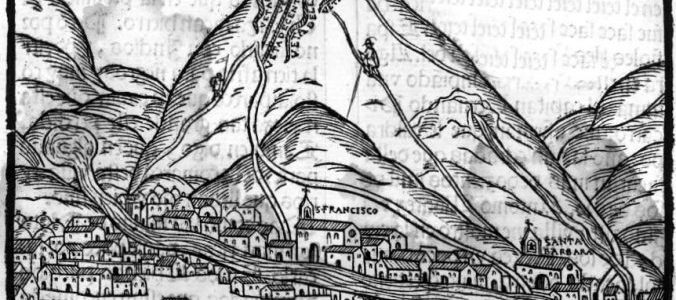
Peter Bakewell’s Miners of the Red Mountain: Indian Labor in Potosí, 1545-1650 (1984) looks at the changing systems of labor and production used at the silver mines of Potosí in the late sixteenth and early seventeenth centuries. Bakewell questions the long-held assumption that the mines were overwhelmingly worked by forced laborers, arguing instead that declining silver output and new refining technologies fueled the growth of a competitive market for specialized, wage-earning workers.… Read More Miners of the Red Mountain (Review)

Repartos y Rebeliones: Jürgen Golte

Jürgen Golte’s Repartos y Rebeliones, published in German in 1977 and translated into Spanish by Carlos Degregori in 1980, analyzes the implementation, evolution, and resistance to the repartimiento de efectos, put in place by Spain’s Bourbon reformers in the eighteenth century.[1] Golte sought to revise earlier studies that overlooked the role of the repartos, a… Read More Repartos y Rebeliones: Jürgen Golte